

Dining: quality meats from London Smoke & Cure
14 September 2026
Falconry: the sport of kings and princes
16 September 2026Realm of the spirit
In the French region of Gascony, armagnac has a cultural significance that takes it far beyond the counters of the local bars and restaurants
T o a Gascon, there can be something almost sacrosanct about an after-dinner glass of Armagnac – the flavoursome, potent and historic brandy produced over just a few thousand hectares in southwestern France.
Sitting in a brasserie in Auch (pronounced Ohsh), within sight of the huge and impressive 15th-century cathedral of Sainte Marie, local wine connoisseur Guillaume Durand cradles a tulip-shaped glass in his hand and tells me about Armagnac’s finer details.
‘First, you look and smell,’ he says, swirling the fragrant amber-coloured liquid around, bowing his head to bring his nose closer to its quarry – but not too close, as he is quick to point out. ‘There should be fruitiness there, something to tell you about the grapes and a hint of caramel, toffee or nougat perhaps.’
He pauses for a moment. ‘Then we taste,’ he says, taking a sip. ‘Warmth, we have. Burning, we don’t; perhaps an aftertaste of plums or violets? And now you realise why this is the finest brandy in France.’

Villages can look like something out of a French movie; with shaded squares, colourful shutters and leisurely games of boules

In the mind of a proud Gascon such as Durand there is little point even debating that subject. The mention of Cognac, which is produced just to the north of here in the Départements of Charente and Charente-Maritime, is dismissed with the sort of Gallic shrug that implies such distractions are fine if you’re the type who doesn’t mind that sort of thing.
Devotees claim Armagnac to be the oldest spirit in France. It can certainly trace its roots back at least as far as the 15th century, and the traditions of viniculture here go back much further than that. In Auch’s cathedral a 400-year-old stained glass window depicts Noah leaning on his elbow beneath a particularly grape-laden vine. In the crypt, meanwhile, the tomb of St Léothade, who was bishop of Auch in the seventh century, features both grapes and vines; as does a mosaic in an excavated third-century Gallo-Roman villa at nearby Seviac.
The historic region of Gascony today encompasses the Département of Gers and parts of Lot and Garonne. The pace both of life and change here is as slow as slow can be. Villages can look like something out of a French movie; with shaded squares, colourful wooden shutters and leisurely games of boules. The whole region can feel strangely devoid of people – and for good reason, this is one of the most thinly populated regions of France.
Some locals will tell you that’s the enduring result of the sacrifices made by Gascons in World War I – following perhaps in the traditions of bravery shown by the most famous Gascon in history – the Comte D’Artagnan, who was both the real-life captain of King Louis XIV’s musketeers and also inspiration for the eponymous character in the novels of Alexandre Dumas.
For more than 2,000 years the region’s sprawling vineyards have been the source of the wine that yields the precious Armagnac
There may be an element of truth to that, but those quiet streets and squares are perhaps more a consequence of a long-standing population drift to Toulouse – the nearest large city – Paris and all points thereafter.
There is something timeless too about the region’s sprawling vineyards that, for more than 2,000 years, have been the source of a relatively low-alcohol wine, barely considered drinkable in itself, which in turn yields the precious Armagnac.
That tale is told in more depth in the town of Condom – the unofficial Armagnac capital – where there is a small museum dedicated to the spirit and its heritage. This is also home to one of the largest names in the business, Janneau, today part of the Giovinetti group, whose distillery can be visited by those keen to see the minutiae of the processes. Perhaps more attractive, though, is to hunt down some of the smaller producers, whose names are redolent with history and expertise.


Among these are Armagnac Delord in the village of Lannepax, Baron de Sigognac in Castelnau d’Auzan, Château de Pellehaut in Montréal and Château du Busca-Maniban, set in a hilltop castle.
Even better still, perhaps, is to sample Armagnac in one of the restaurants for whom local cuisine is almost a matter of honour. The spirit makes an appearance in many a Gascon speciality, which tend to be hearty, filling and based on the seasonal produce of the region.
Among them is garbure, the kind of soup that merits a cold day to enjoy properly, it’s made from cabbage, beans and duck confit; daube de boeuf – the beef sourced from the local Aquitaine cattle and marinated in a red wine sauce; magret de canard, served pink and thickly sliced and salmis de palombe, wood pigeon in a rich sauce made from reduced red wine, ham, garlic, onions and herbs.
Local dishes include magret de canard, served pink and thickly sliced, and salmis de palombe, wood pigeon in a rich red wine sauce

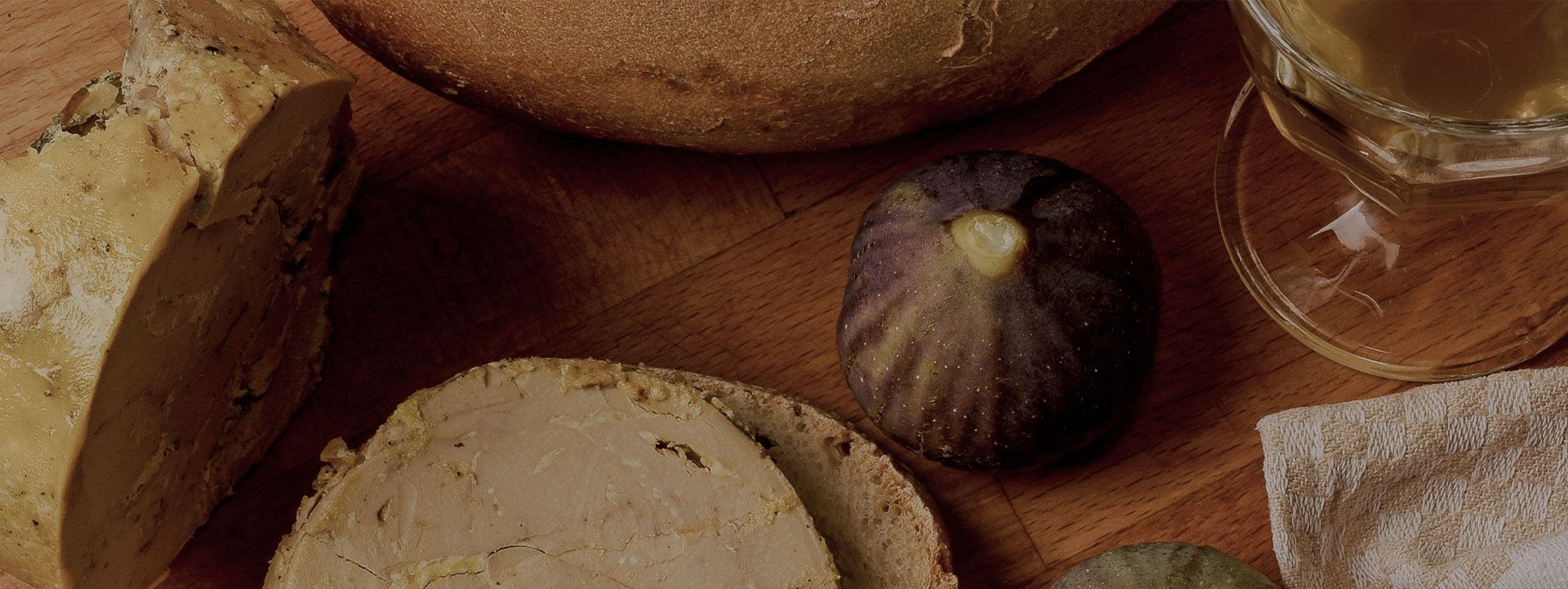
Dishes are often cooked in goose fat – a by-product of another glorious Gascon speciality, foie gras, and visitors should in particular look out for the words 'foie gras fermier’ on their menu or, indeed, if they are sampling any of the local markets. The buttery, unctuous goose-liver paté won’t disappoint and the ‘fermier’ title indicates a small local producer.
After feasting on such dishes, the best way to conclude, of course, is with a glass of Armagnac – indeed, in Gascony, it might be seen as a sacrilegious to suggest anything different.