

Destinations: Kempinski Barbaros Bay, Bodrum
14 October 2020
The Rijksmuseum: Amsterdam’s highlight
16 October 2020Only the Brave
The UK’s top gallantry medals are commanding ever-higher prices at auction as collectors go in search of a finite resource
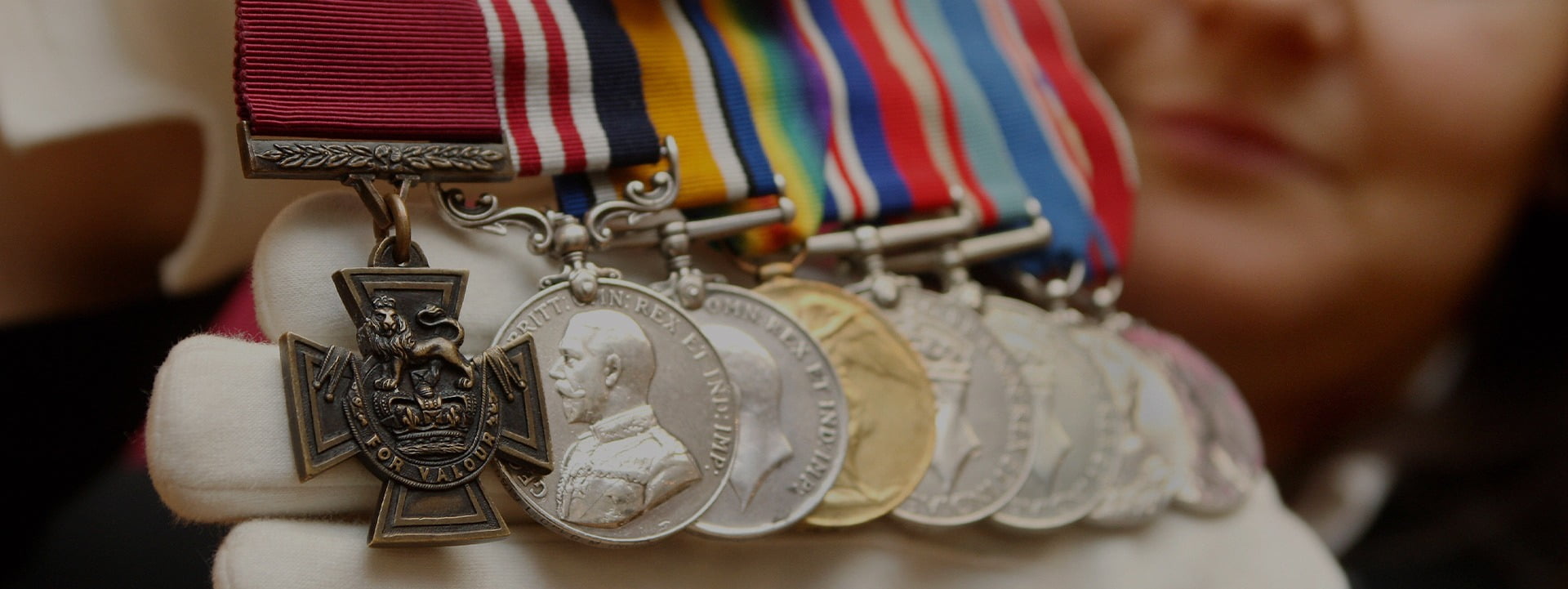
P rivate Sidney Godley of the Royal Fusiliers won the Victoria Cross at the battle of Mons in 1914, having held off multiple attacks from German troops and suffered bullet and shrapnel wounds to the head prior to being finally overwhelmed and taken prisoner.
Last year, Private Godley’s medal was sold by auction house Spink for £276,000, providing an indication of the sums that gallantry medals can command when they appear on the market.
Victoria Crosses are particularly sought-after. This is the UK’s highest award for bravery and only 1,356 have ever been issued, which immediately creates a situation of supply and demand.
John Millensted, a medals expert at Bonhams auctioneers in London, says: ‘The market is very buoyant for that reason. There are a lot of medals in museums, but it would be a rare event for any of them to come up for sale. Likewise, there are many owned by families who would never sell what they see as a precious heirloom.


‘That leaves what is already in collections and these appear on the market when collectors decide to sell.’
In terms of investment opportunities, few items in the sector have increased in value as rapidly as the Victoria Cross over the course of the past 20 years, although medals awarded for certain specific battles and campaigns are also extremely sought-after by serious collectors.
‘Victoria Crosses are the top of the tree,’ says Millensted, ‘though medals from the Falklands War [in 1982] and the Battle of Britain [in 1940] are others that are popular.’
Very often it is the story behind a medal that determines its value. ‘Anything from the Dambusters raid [16-17 May 1943], along with the paperwork and ephemera associated with it. None of the medals from World War II were named – unlike those from World War I – so the additional information is important in determining value.’
Another factor that is likely to influence the market for gallantry medals is the centenary of the start of World War I in 2014, when awards from that conflict are likely to become more newsworthy and sought-after.
‘People buy to collect or as an investment,’ says Millensted. ‘If you have a passion for the subject and your collection is also increasing in value, then that’s a bonus.
‘Every so often something very interesting comes along. Recently we had a Distinguished Flying Medal (DFM) that was awarded to an RAF airman in 1940 for an operation over Norway. That was pretty unusual.
In terms of investment opportunities, few items in the sector have increased in value as rapidly as the Victoria Cross over the course of the past 20 years
‘Sometimes it’s not just down to value, it’s about what the person did to be awarded their medals.’
When Millensted started at Bonhams in 1994 a standard trio of World War I campaign medals would have sold for around £20, now they would change hands for around £100.
At the higher end of the market a VC might have commanded a price of around £80,000 back then, today that figure will have at least doubled. In 2009, for example, a VC awarded in 1943 to bomber pilot Flight Lieutenant Bill Reid sold for £348,000 at Spink.


Key to the medals market are several committed collectors. Among these is the British peer, businessman and philanthropist Lord Ashcroft, who has a collection of more than 160 VCs, more than one-tenth of all of those ever awarded.
In the past, Ashcroft has spoken of a long-standing interest in acts of bravery and in the VC in particular. He bought the first of his collection of the medals in 1986 and has added to it regularly. ‘As soon as I could afford to, I found out when the next VC was coming up for auction and bought it,’ he says.
‘When my cheque cleared, I was in my office reading and re-reading the story of this extraordinary man and a frisson went through me – one that only a collector can ever have.’
‘When my cheque cleared, I was in my office reading and re-reading the story of this extraordinary man and a frisson went through me – one that only a collector can ever have. The feeling was that of not being sated. I knew then that I would never stop collecting.’
In 2009 he bought a particularly rare example of a VC and bar – the award given to someone who was twice awarded the UK’s highest bravery medal – for a sum believed to be in the region of £1.5m.
The medal in question belonged to captain Noel Chavasse, of the Royal Army Medical Corps, who died of wounds in 1917, during World War I. A graduate of Oxford University, Chavasse also represented Britain at the Olympic Games of 1908 in London where he ran in the 400 metres. Said Ashcroft: ‘I always felt the collection would never be complete unless it had a VC and Bar in it – and this is the ultimate VC and Bar. It has a spectacular story to it in terms of sustained bravery. Day after day, this courageous man was risking his life in the trenches to save his comrades.’
Ashcroft’s entire collection is on display at the Imperial War Museum in south London, in a modern £5 million wing that he has donated.
An idea of the overall buoyancy of the market can be seen from the Spink sale that included flight lieutenant Reid’s record-breaking VC group. At the same sale the auction house also sold a Distinguished Conduct Medal (DCM) for £120,000 and the entire event raised £823,000.
‘The market will continue to improve,’ adds Millensted. ‘You need to be careful where you invest, but it’s a good, solid bet. And there is a finite supply. Let’s face it, there won’t be any more Battle of Waterloo medals.’
Indeed there are only around 8,000 of these in existence. They were issued to British veterans of the 1815 battle that marked the end of the line for Napoleon Bonaparte.
Today they would fetch around £7,000 but, to collectors, much of their real attraction lies in their link to such a turning point in world history.

‘Like a good share portfolio, I wouldn’t stick all of your money into one campaign or one war,’ says Millensted. ‘Perhaps start with a Waterloo medal and then go on to awards handed to people returning from Afghanistan.’
Another strategy involves buying from specific campaigns – for example the Crimean War and the Sepoy mutiny of 1857 in India. World War I, meanwhile, has enduring appeal with collectors but, while its higher awards change hands for many thousands of pounds, its standard campaign medals tell a different story.
Says Millensted: ‘You could pick up one of these for around £20 which, considering what those men had to go through, seems remarkably little.’