

Pictorially capturing the tribes of the world
21 October 2020
Campbell Marson: bespoke wooden eyewear
27 October 2020Unsung Heroes
Their names may not be familiar, but these supercars have got plenty of bite – and they’re hoping to take a chunk out of some of the big boys
J ust look at the gorgeous cars further down this page. The styling is a mix of sophisticated racing pedigree and elegant contemporary design. If you could hear them, the engines have a spine-tingling roar and if you could drive them, you would find the performance eye-watering. But however long you stare at the badge on the bonnet of these cars, the marque will probably be completely unknown to you.
Welcome to the world of the secret supercars: the booming world of boutique manufacturers, often based in remote, unfashionable locations, producing tiny numbers of exclusive supercars for very discerning clients.
They usually do not need advertising, marketing or promotion. Although these brands you have probably never heard of are certainly costly, they are also remarkably capable.

How capable? Well, one example is a little-known hand-built two-seater made in a small workshop in the desert of Texas, which has recently broken two global speed records.

At the time of writing, the Hennessey Venom GT is the fastest accelerating car you can buy anywhere in the world (0-200mph/(322kph) in 14.5 seconds) and has the highest top speed (270.5mph). The Venom is fitted with a highly tuned Chevrolet 6.2-litre twin-turbo V8 engine, meaning the benchmark 0-60mph acceleration takes around 2.5 seconds.
These records have not been validated because Hennessey does not make the total of 30 cars a year necessary to be officially recognised as a manufacturer. Instead, Hennessey is an established engine tuning company that builds a small number of cars as a sideline. Not surprisingly, it seems to have no problem selling them. Some reports say Aerosmith singer Steve Tyler has recently bought a $1m Venom.
Thanks to its staggering performance Hennessey may soon appear on car enthusiasts’ radar. In fact the tiny Texan brand is already famous compared to an unheard-of newcomer from the unlikely supercar birthplace of Denmark.
The Zenvo ST1 is built in a small building to the south of the island of Zealand… but there’s nothing small about its performance. This two-seater has Zenvo’s own 7.0-litre turbocharged and supercharged engine, which produces a massive 1,250 horsepower. The 0-60mph sprint takes just 2.9 seconds and it has a top speed of 233mph. The design is aggressively modern and memorable.
The proliferation of auto technology means more and more small operators such as Austrian company Tushek & Spigel are joining the field

A price tag of $1.1m makes the ST1 among the world’s most expensive cars, although that bill does include the attention of a team of specialist mechanics who will fly to your location anywhere in the world if you have a problem. It also pays for a certain degree of exclusivity. There are only believed to be just five Zenvos on the world’s roads.
Five may sound a very small figure, but in comparison to some Zenvo is quite well represented out and about. In the world of ultra-exclusive supercars, even more unusual vehicles can have a distinct appeal for some buyers.
Take, for example, the Tushek & Spigel; created in the small town of Mureck in Austria. The Tushek & Spigel TS600 was first glimpsed at a prestigious auto salon event in Monaco in 2014. It is not known whether a single car has been sold yet.
For the price of $600,000 this convertible offers a mix of track technology and contemporary luxury: the chassis is made of carbon and titanium, there are scissor-opening doors, and the interior is decked out in leather and aluminum. The manufacturers claim it can manage 0-60mph in 2.9 seconds and has a 218mph top speed.
While everyone from schoolboys to professional racing drivers knows the iconic branding of leading luxury manufacturers such as Ferrari, Lamborghini, Bugatti and McLaren, the proliferation of auto technology means more and more small operators such as Tushek & Spigel are joining the field.
Those in the know could add a second tier of budding supercar builders. Names such as Gumpert, Noble, Koenigsegg, Spyker, Marussia and Pagani regularly appear at car displays, in the pages of motoring magazines and at track days. But even those are as multinational corporations compared to some of the world’s smallest manufacturers.

Tramontana’s race-influenced design also includes exposed wheels and suspension

In the small town of West Richland, Washington State, is a supercar company based in Jarod Shelby’s back yard. Shelby Supercars, or SSC, has nothing to do with American motoring legend Carol Shelby, but instead makes specialist sports coupes. For three years its Ultimate Aero even claimed the title of the world’s fastest production car after reaching 256mph in 2007. Despite this, SSC only built and sold a handful of Aeros.
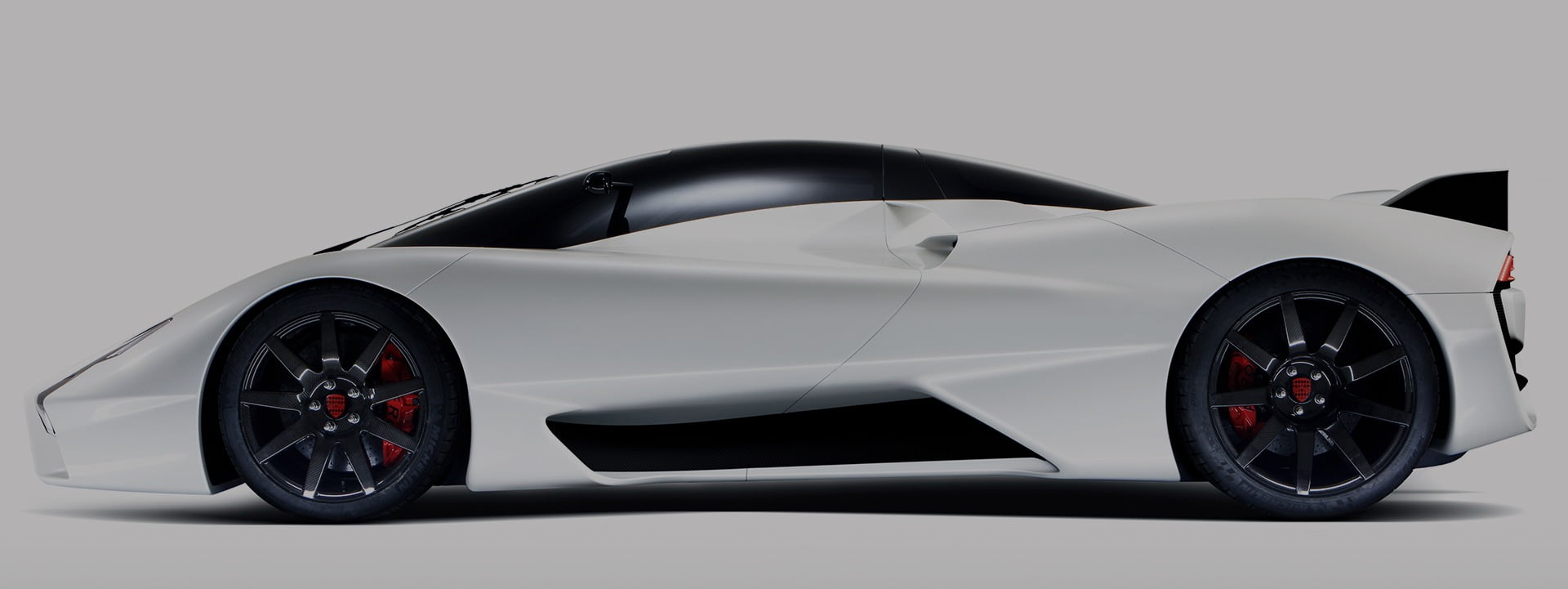
In 2014 SSC unveiled a new car, the $1.3m Tuatara. It will not go on sale until 2015, by which time the firm hopes to have actually built its own small, modern factory.
A few details about the Tuatara have been leaked. This sleek road-going two-seater is built almost entirely of carbon fibre (even the wheels) making it extremely light. The unprecedented engine output (without emissions controls) is 1,700 horsepower, enough to power the Tuatara from 0-60mph in just 2.3 seconds and on to a maximum speed of 276mph.
Figures like this should propel the Tuatara into record books if independently verified. SSC say its normally slim order book is bulging – with 14 definite buyers already signed up.
Back in Europe, another mini-manufacturer has also been building exotic supercars for a decade. Yet Advanced Design Tramontana, based near Girona in Spain, is still almost unheard of. A maximum of 12 cars are built a year. Its most recent offering, the Tramontana R, is a mid-engined, high-performance coupe in which the two occupants sit in line rather than side by side.
The race-influenced design also includes exposed wheels and suspension extending from a central cockpit made of a sophisticated mix of carbon, magnesium and aluminum. The bonnet badge may be unfamiliar but it is in solid white gold. The Tramontana R costs over $500,000.
The Icona Vulcano is definitely the most appealing car ever to appear from China. It is a powerful hybrid with a claimed top speed of 220mph
A similar story is repeated all over the world. For example, in another tiny factory in Holland, a small team of skilled engineers are hand-building Vencer Sarthe supercars. This $350,000 beautifully styled Ferrari rival is to be released in 2015, with a 6.3-litre supercharged V8 powering it to a 210mph maximum.
Similar dedicated specialist teams are building their hyper-cars with little fanfare in New Zealand (the Hulme F1), in Germany (the Weismann GT) and in Britain (Radical SR8 LM). From Australia (the Elfin Streamliner to Morocco (Laraki Epitome), increasing numbers of companies are trying to demonstrate that, in the world of the supercar builders, small can be beautiful.
Finally, a special mention is due to two of the new wave of little-known dream cars. These are extremely fast, luxury sports cars but are also a glimpse of the next generation of supercars.
The Icona Vulcano is definitely the most appealing car ever to appear from China. It is a powerful hybrid with a claimed top speed of 220mph from its forward-thinking combination of petrol V12 and electric motor. The manufacturer claims this classic-looking sportscar is capable of blasting from 0-60mph in under two seconds.
And from Croatia comes the all-electric Concept One from battery specialists Rimac. The design is slippery, sleek and stylish and it also has extraordinary performance for a battery-powered vehicle: 0-60mph takes just 2.8 seconds and top speed is 190mph.

Amazingly, the Concept has a range of 373 miles with a 30-minute recharge. This £1m supercar is due to be on sale in 2015 and, as the world’s fastest production electric car, should feature on motoring TV shows and magazine covers. Perhaps even one day Rimac’s badge (an ‘R’ within a shield) will be as recognisable as Ferrari’s prancing horse, Aston Martin’s spreading wings or Lamborghini’s raging bull.