

For valour: how to collect British military medals
14 October 2020
Brief encounters: rent a supercar and enjoy
18 October 2020Brave New World
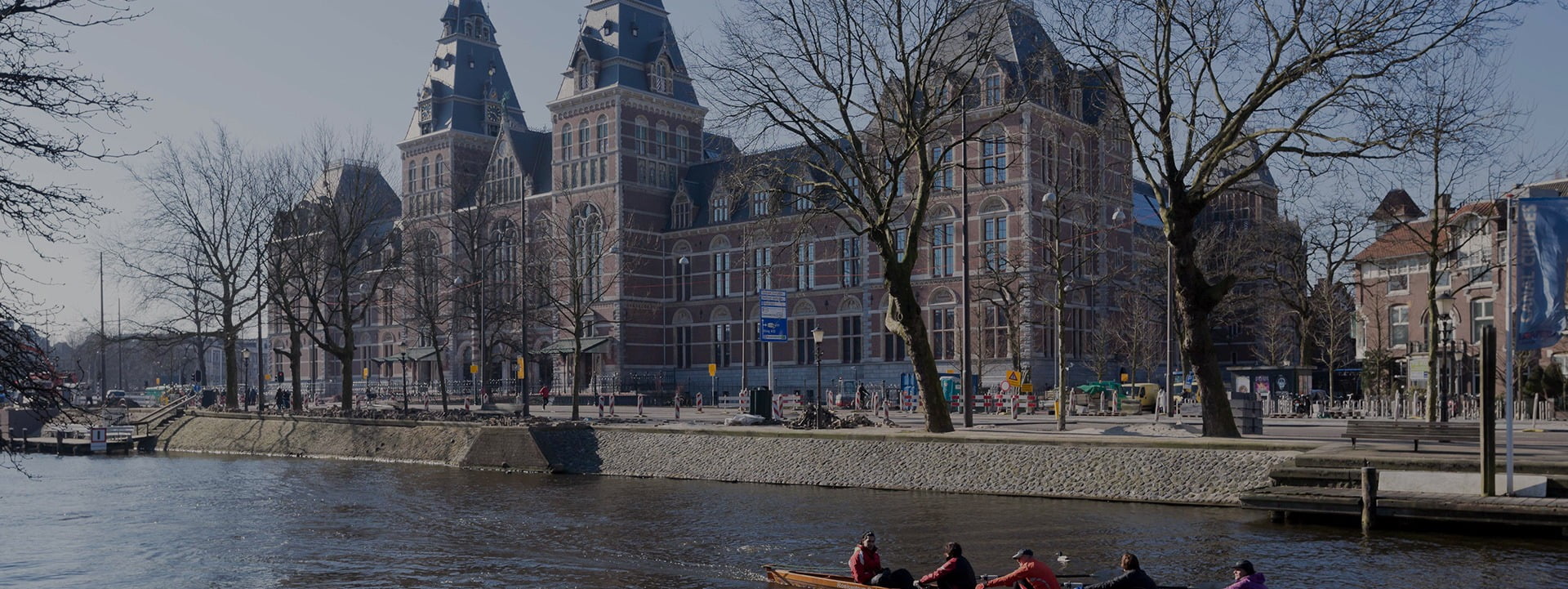
It has taken 10 years and cost £320m, but the restoration of Amsterdam’s Rijksmuseum is an outstanding triumph
M y memory of Amsterdam’s Rijksmuseum was of a labyrinthine, rather gloomy edifice that, for all its artistic treasures, somehow felt both rooted in the past and imbued with melancholy.
Those thoughts, though, are today fit only for the dustbin of history. Closed for 10 years for an all-encompassing, €375m (£320m) refurbishment, the museum has emerged transformed and triumphant.
The lead architects of the redesign, renowned Spanish practice Cruz y Ortiz, have reconnected the building to the original design of architect Pierre Cuypers, who initially completed the project in 1885.
Back comes the airy atrium where visitors can plan their route around eight centuries, 80 rooms and 8,000 artworks or take a breather prior to another foray into the many and varied treasures.


Also making a return is Cuypers’ original plan for accessing the museum, with the visitor ascending to a lofty, ecclesiastically inspired hallway where stained-glass depictions of the greats of philosophy, art and literature look down to provide a steadying influence before you step forward into the imposing 17th-century gallery.
Dedicated to the art of Holland’s Golden Age and adorned with restored frescoes, this is home to an impressive selection of masterpieces, two of which – one small, one large – are likely to be the Rijksmuseum’s biggest crowd-pullers.
The former is The Milkmaid by Johannes Vermeer. Depicting a humble domestic servant at work in a kitchen, the painting may have more to it than meets the eye. The maid may be engaged in a menial task, focused on the job in hand, but traditionally the work is seen as having a certain veiled sexuality – does, for example, the small Delft tile depicting Cupid in the background imply our heroine is day-dreaming about her lover?
The latter is Rembrandt van Rijn’s The Night Watch, positioned in all its glory at the far end of the gallery and dubbed the museum’s ‘altarpiece’ by its director Wim Pijbes. Measuring 11ft by 14ft, this dramatic, subtly lit rendition of a unit of 17th-century troops, complete with feather plumes, lace collars and gleaming weapons, is the only item that has not changed location as part of the refurbishment. But, as much as this famous pair may deserve their popularity, there is much more to be enjoyed than these two world-famous Dutch masterpieces in the newly restored museum.
Dedicated to the art of Holland’s Golden Age and adorned with restored frescoes, this is home to an impressive selection of masterpieces
As Taco Dibbits, the director of collections, says: ‘When you enter the Rijksmuseum you’re transported to another world: the world of Rembrandt, Vermeer and Mondrian. I think it is the only national museum in the world that is not only a museum of painting, not only a museum of the decorative arts, but also a museum of history.’
That statement manifests itself in galleries that bring together paintings with a range of objects from the same era. ‘We were interested in giving the public a sense of beauty in context,’ adds Dibbits. To achieve this items are arranged chronologically, with Rembrandt’s works, for example, rubbing shoulders with silverware and furniture made by craftsmen whom the great man would have known.
This is a radically different approach to how the museum used to be. Back then, its galleries were arranged thematically: paintings with paintings, ceramics with ceramics and sculpture with sculpture.
The chronological approach posed challenges for the man charged with making the displays clear and concise – Jean-Michel Wilmotte, architect of museum scenography, who says: ‘We needed to find a colour that provided a kind of guideline to create unity around the museum.’
His answer was to have the walls in the galleries painted in shades of grey, ranging from very pale in the 20th-century displays – to echo the hues of steel and aluminium associated with that era’s technological advances – to deep and dark, in the medieval galleries, where the walls not only provide a dramatic backdrop for the many gold and silver items on show, but also hint at the shadows of a crypt or the inner sanctum of some great cathedral.

‘When you enter the Rijksmuseum you’re transported to another world: the world of Rembrandt, Vermeer and Mondrian.’

Wilmotte has also worked wonders with the actual displays themselves. Light comes from ceiling mounted ‘chandeliers’, while frameless glass cabinets become almost invisible. ‘I wanted to unify the space,’ he adds, ‘so that visitors only see the objects.’
This approach perhaps works best in the Special Collections gallery on the ground floor, where a huge and eclectic range of material can be found, from intricate silver miniatures, to gleaming model boats, to ornate pistols and muskets.
‘I think the weapons area is fantastic,’ adds Wilmotte. ‘It is usually very boring to look at a gun on display, but what we have done here is very contemporary. Likewise, one glass on its own can be boring, but when you have 100 together then it’s exciting.’
He has a point, in one cabinet a selection of ivory-handled flintlock pistols seem to float in the air at different angles, in another a large number of magic lantern slides depict animals, battles and a hint of 18th-century raunchiness, while in a third the hammock of 17th-century admiral Cornelius de Witt hangs above the simple campaign bed of William of Orange, the Dutch prince wounded at the Battle of Waterloo in 1815.
The approach adds depth and drama to the Rijksmuseum displays and, whereas the paintings of the Dutch masters may have had the power to stand alone, in other areas it is often the associated objects that are the most intriguing and emotive.
Says Wilmotte: ‘You can see paintings, china and woodwork together. You are not just visiting a museum, you are deep in a different century. This is unique.’
Another example of the phenomenon he describes can be found in the 20th century gallery, on the top floor, which is home to perhaps the most sinister item in the museum. At first glance this appears to be a large, ugly, rather ostentatious chess set, but look closer and you realise the pawns are helmeted soldiers, the rooks howitzers and the bishops fighter aircraft.
On closer inspection it transpires the set was a gift from leading Nazi Heinrich Himmler to Anton Mussert, leader of the Dutch National Socialist party, as a reward for his loyalty. Juxtaposed with the uniform of a concentration camp survivor, it speaks volumes about a deeply disturbed period of history and comes as something of a shock after the measured pomp and tranquil domesticity of the 17th-century galleries for which the museum has so long been famous.
Words: DH


