

Wine: why Australian offerings can be great
13 October 2020
Driving: The world’s best electric supercars
14 October 2020Natural Selections
Natural history is proving an attractive market for buyers, with some truly breath-taking investment opportunities
Y ou’re likely to need a certain amount of display space if you’re a collector of natural history treasures.
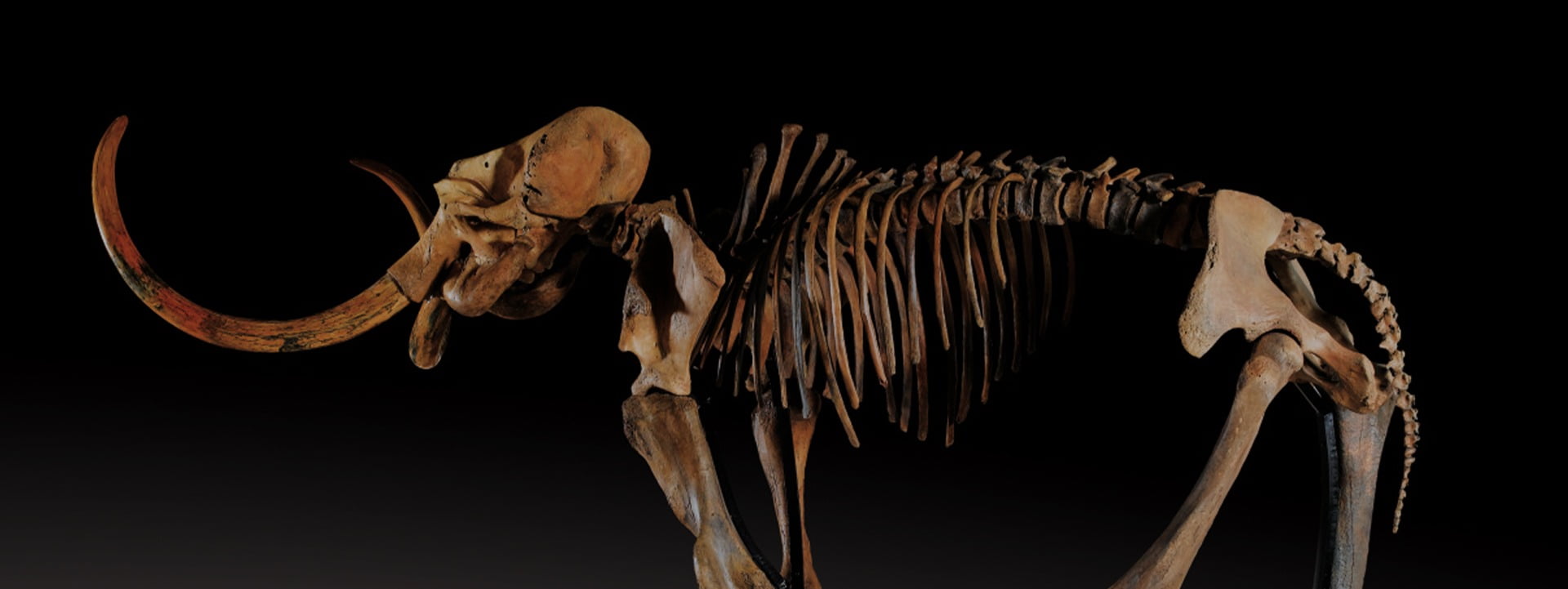
At auction house Sotheby’s sale on the subject last October in Paris, for example, one of the most sought-after pieces was the intact skeleton of a woolly mammoth – the largest land mammal of all time, as the catalogue pointed out.
Complete with huge tusks, this sold for €240,750 (£195,000). It cuts an impressive figure in more ways than one, but it is something that is dwarfed, if that is the appropriate phrase, by the leading sales in the market.

In 2001, for example, the skeleton of a Tyrannosaurus Rex, christened Sue, sold for $7.6 million (£4.7m).
And interest in this sector is growing among collectors, suggests Eric Mickeler, a natural history specialist at Sotheby’s who helped to organise that October 2012 sale in Paris. This is partly because the shapes and colours of the natural world of long ago are in keeping with many of the forms and themes of contemporary art.

‘There are many crossovers from modern art,’ he says, ‘collectors from that area often like natural history objects, because the flowing form and the colours can be very similar to contemporary art pieces. From time to time I see a detail of an ammonite [an extinct marine invertebrate with a distinctive coiled shell] that is very close to a painting from a modern artist.
‘Look at someone such as Damian Hirst, whose inspiration is often natural history.’
Mickeler adds that interest in the sector is also globalising. Long popular in the US, there is now more interest to be found in areas such as Russia, the Middle East and China.
In the latter, he points out, dinosaurs are proving particularly sought after. ‘That’s partly because a dinosaur resembles a dragon, and that can be a symbol of good luck.’
Large corporations have also helped stoke the market, showing an enthusiasm for sizeable, dramatic pieces to adorn lobby areas, conference facilities and meeting rooms.
But it is intact, or largely intact, dinosaur skeletons that have proved to be the most sought-after prizes in the category.
Carnivores, with their dramatic teeth and claws, tend to command the highest prices among dinosaur sales, but they are not alone in attracting interest
In 2010 at Sotheby’s Paris natural history sale an entire, 33ft-long Allosaurus skeleton was the headline item. This carnivore, which 150 million years ago would have roamed what is now Wyoming, sold for €1,296,750 (£1,035,000) – comfortably surpassing its estimate price of €1m – to an anonymous European buyer bidding by telephone.
The Allosaurus may have created considerable interest among buyers, but it was far from the multi-million price tag commanded by ‘Sue’ the Tyrannosaurus Rex when she was sold at Sotheby’s in 1997 to Chicago’s Field Museum.

Carnivores, with their dramatic teeth and claws, tend to command the highest prices among dinosaur sales, but they are not alone in attracting interest.
At Sotheby’s 2010 sale a Plesiosaurus – a long-necked marine reptile – beat its high estimate of €370,000 and sold for €456,750 while a woolly rhinoceros, discovered in Russia, was snapped up for €96,750.
While such skeletons possess an inherent drama that lures buyers, those thinking of investing in such pieces need to consider how complete they are.
Says Mickeler: ‘For species that aren’t particularly rare, such as the Triceratops, dealers might take bones from several specimens to create an example. In the American Museum of Natural History in New York they used 20 to make one skeleton. It’s less of a problem for rarer species – in the case of Tyrannosaurus Rex it’s very, very rare to find a complete example.’

And, while Mickeler points out the attraction of owning something that is unique, collectors should also be aware that they are dealing in a market that can be affected by new discoveries.
That does not seem to be deterring buyers, however, with several celebrities among those who are known to have an interest in collecting.

In 2007, Leonardo DiCaprio and Nicolas Cage were supposedly both interested in purchasing the skull of a Tyrannosaurus bataar
In 2007, the media reported how American Hollywood stars Leonardo DiCaprio and Nicolas Cage were supposedly both interested in purchasing the skull of a Tyrannosaurus bataar (a relative of T-rex) at auction. The object was finally bought by Cage for £174,000.
Sotheby’s October sale may not have featured any carnivorous dinosaurs, but it had some tempting specimens on offer – most notably that woolly mammoth, unearthed in Siberia and dating back to the Middle Paleolithic period when it would have had to keep an eye out for hungry Neanderthals.
It is certainly dramatic to behold, standing 3.5 metres tall and almost as long. and it provided an extraordinary centrepiece to proceedings.
Other highlights included an egg of Aepyornix maximus, a giant ancestor of the ostrich – often referred to as the Roc. These huge birds found a place in mythology – Sinbad the Sailor and his crew had an encounter with one – while medieval sailors thought they were giant, high-altitude predators. Unsurprisingly, given their size, they were in fact ground dwellers and they were also lot more real than the mythical mariner. Fragments of their eggs can still be found littering the ground of Madagascar.
This entire specimen is both extremely rare and possesses an elegance of form that, says Mickeler, contrasted attractively with the giant and gaunt appearance of the mammoth. He adds that a woolly rhinoceros also raised a great deal of interest, and that modern art lovers appreciated the large wooden panels from ore deposits which could adorn walls like so many paintings. A large vertical wall of fossilised scallop shells, meanwhile, provided an extraordinary degree of ancient texture.
The commercial sale of fossils remains a somewhat controversial topic, however, with some experts suggesting that once specimens appear on the market they tend to disappear into private collections rarely to be seen again. This, they suggest, means they are lost forever to science.
An exception to that rule is Sue the T-Rex – who is now on public display. Though that example was purchased with the collaborative financial efforts of Californian State Museum, Walt Disney and McDonald’s, to out-compete other buyers.

Sinbad the Sailor and his crew had an encounter with a Roc – while medieval sailors thought they were giant, high-altitude predators
This article was originally published in Halcyon magazine in 2013
