
Extra special: incredible additions for luxury cars
7 October 2020
Dining: Great Danes; Copenhagen’s top restaurants
12 October 2020A Quest for the Best
The Prix de l’Arc de Triomphe is described by its organisers as ‘more a monument than a race’ – and that isn’t just a case of Gallic bravado
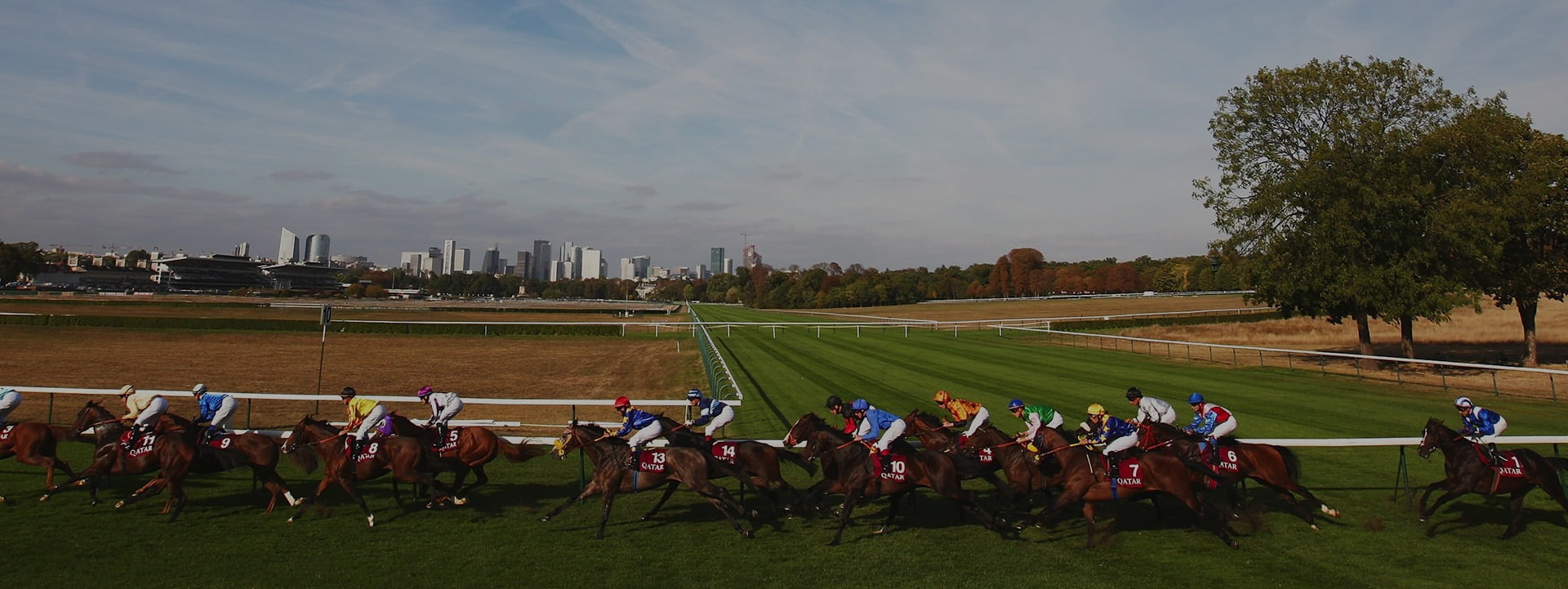
L ongchamp is arguably the greatest place in Europe to go racing. The historic Parisian course hosts meetings from May until late October, but its biggest day of the year surely comes when it hosts the Prix de l’Arc de Triomphe.
This wonderful race, traditionally held on the first Sunday of October, pitches the one-and-a-half mile horses from around the world against each another and the winners tend to go straight to stud, commanding huge fees.
Perhaps the best description of the race comes from the race organisers themselves, who say, ‘Ce n’est pas une course, c’est un monument’ or ‘Not so much a race as a monument’.
To prove just how monumental the Arc is you need only look at the list of previous winners that includes equine legends such as Ribot, Alleged, Sea Bird, Dancing Brave, Zarkava and Sea The Stars.
Since the first race was run in 1920 some of the greatest thoroughbreds ever to grace a racecourse have won the Arc and it consistently delivers the best the sport has to offer.
If you are an aficionado of the turf seeing your first Arc is an experience that will live with you forever. If you’re staying in a hotel in the centre of Paris, making your way to the Hippodrome de Longchamp in the Bois de Boulogne, just a few miles west, is a pleasure in itself. You certainly don’t get the ugly urban sprawl that accompanies any trip to London’s racecourses at Sandown or Kempton Park.

Until 1930, many Parisians came to the track down the river on steamboats and various other vessels, the trip taking around an hour from the city centre to the Pont de Suresnes. These days well-heeled owners and racegoers tend to fly in by helicopter, landing on a section of the interior of the course especially reserved for them.
France Galop, the organisation that runs horse racing in France, and operates Longchamp, does its best to welcome new and returning race-goers, so entry to the course on the big day is usually free, and you are welcomed by a brass band and young women handing out free race-cards.
The nature of Longchamp brings out the best in the world’s top horses. Built on the banks of the Seine River, the course includes a famous hill that provides a real challenge for horses
It is very much France’s answer to Royal Ascot, but it all happens on one autumn day in Paris instead of five days in June for the British equivalent. The organisers strive to make the day as glamorous as possible, and it is the one time in the year when the Parisians dress up and go to the races, whether they are interested in horse racing or not. Beautiful dresses and elegant hats are de rigeur for the ladies as are smart, well-cut suits for the chaps.
There is a slightly haughty, and distinctly Gallic, see-and-be-seen vibe to the place on Arc day. As with Ascot this is an important event on the social calendar so the place is full of non-racing people who use the occasion to network. Members of famous French racing families hobnob with old landed aristos and the nouveau riche alike.

You will find great French racing names such as Wertheimer et Frère, Daniel Wildenstein, Famille Niarchos and the perhaps unfortunately named Madame Bollack-Badel, among the owners on the racecard.
It’s a classy affair for sure, and is not only for the French – lovers of the turf make the pilgrimage from countries around the world.
‘What attracts racing enthusiasts to Longchamp? Simon Rowlands, a 20-year veteran of UK racing information company Timeform, says that one appeal of the Arc is down to an ancient rivalry between two neighbours – in this case France and Britain (with Ireland thrown into the mix as well).
‘Not only is it the most valuable race in Europe, but it provides one of those rare occasions on which horse racing fans get to support their country’s best horses on an international stage against the best horses in France, and elsewhere in the world,’ he says.
‘The French have a great record of keeping their big prize at home, especially with younger horses targeted specifically at the race, but runners from Ireland or Britain have done well in recent times. The 2010 winner, Workforce, was sent from the Newmarket stables of Sir Michael Stoute to follow up his victory in The Derby at Epsom.’
The Arc is certainly one of the most exhilarating races to watch and its fair to say that only the best horses in the world have the necessary attributes to win.
Rowlands believes it is such a spectacle because the nature of Longchamp brings out the best in the world’s top horses. Built on the banks of the Seine River, the course includes a famous hill that provides a real challenge for competing thoroughbreds.
‘There is always a sizeable field in the Arc which puts the emphasis on speed and adaptability, for horse and jockey alike, while autumn ground usually tests stamina too,’ says Rowlands. ‘It’s what makes it such a great race and why the roll-call of winners includes so many of the greatest mile-and-a-half horses in history.’
If the race is a terrific spectacle for racegoers it is also great value for money for those seeking to treat their corporate guests to a great day out.
Edinburgh-based financial PR Scott White, who hasn’t missed an Arc in 10 years, reckons there isn’t a better experience. ‘As a total package I think it is the finest experience I have ever had in European racing. The atmosphere, the top quality field and the feeling that you are witnessing part of history makes it a veryspecial occasion. My clients always say they haven’t had a better experience,’ he says.
One disappointment this year, however, concerned the 2011 Epsom Derby winner, the French-trained Pour Moi, who was injured in August and subsequently retired to stud – without having a shot at the Arc.
As the horse’s trainer, Andre Fabre, said: ‘What he did at Epsom was amazing, to go from last to first. For a horse to get there so easily, the turn of foot he showed was a sign of great ability. I have never trained a middle-distance horse that had such acceleration. I’m sure he will be a super sire. He’s a beautiful, well-bred colt with a fantastic action and a change of pace.’
Pour Moi may never enter the Longchamp winner’s enclosure, but you can expect a descendant or two of his to do so.
As with Ascot this is an important event on the social calendar so the place is full of non-racing people
Sea Bird is considered by many to be the greatest post-war European flat racehorse. Owned by the Lille textile manufacturer Jean Ternynck, he won both the 1965 Epsom Derby and Arc in breathtaking fashion, earning a Timeform rating of 145, still the highest ever flat figure awarded by that publication.
In the Arc he faced an incredibly strong field, and starting at odds of 6/5. He destroyed the opposition by six lengths, despite veering across the track with jockey Pat Glennon patting him down the neck in the final 100 yards.


Always considered the best horse never to win the Epsom Derby when his jockey mistimed his run to finish a half-length second, Dancing Brave more than made up for it at the 1986 Arc. With a new jockey, Pat Eddery, the Khalid Abdullah-owned colt crushed a high-class field with a devastating late run that saw him win by a length and a half and set a new record time.
Racing enthusiasts who saw Sea The Stars’ unbeaten run of six victories as a three-year-old in 2009 realise that it’s unlikely they will ever see such an equine superstar again. After winning the 2,000 Guineas and the Epsom Derby it was left to his Irish jockey, Mick Kinane, to steer the odds-on favourite home in the Arc. Turning into the straight, Sea The Stars seemed to be boxed in and in trouble. But as the principals started to pick up, Kinane found a gap and unleashed his mount’s devastating turn of foot. In a matter of strides he left the field in his wake to win by his customary two lengths.Stud owner Christopher Tui now charges some 85,000 euros a time for Sea The Stars’ services.
