

Boating: Bugatti yachts are ahead of the curve
16 December 2020
Lunaz to begin production of electric classic Range Rovers
28 December 2020Past and present
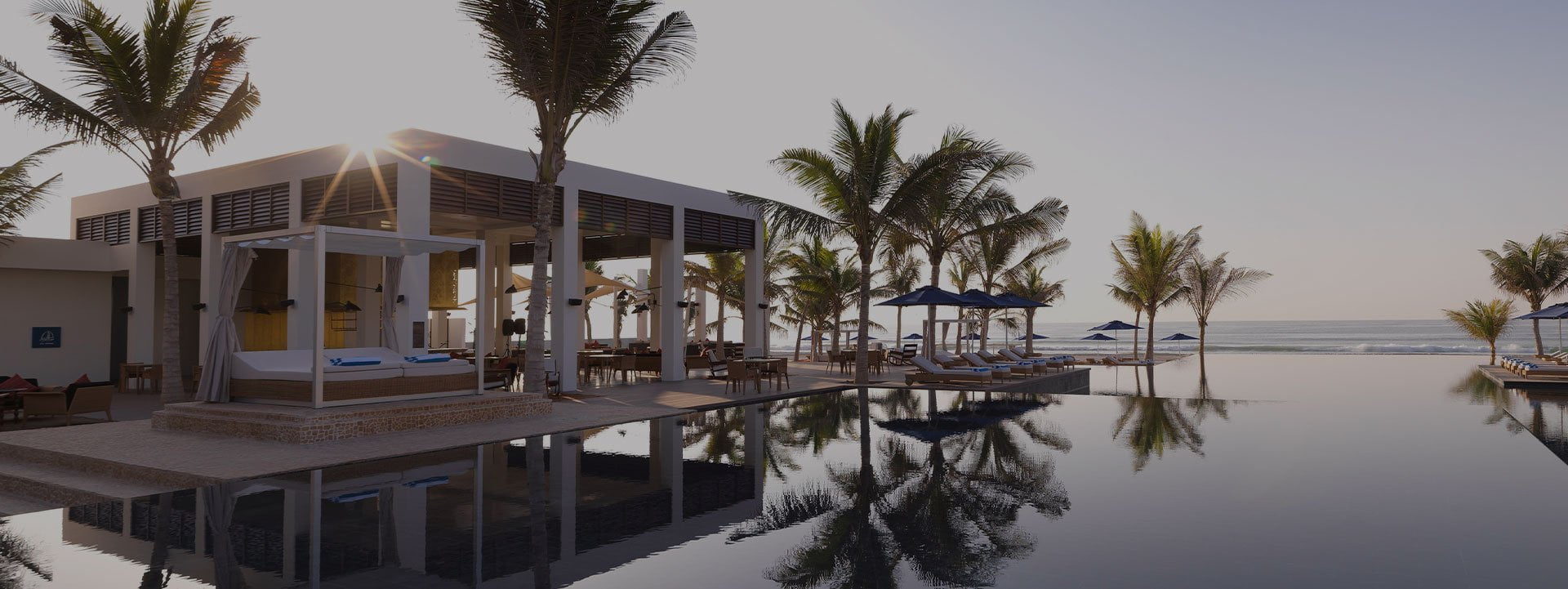
The launch of the new Anantara resort on Oman’s Frankincense Coast brings a different dynamic to a place that has been luring intrepid travellers for centuries
I
fell into conversation with four residents of Dubai over dinner in the Anantara’s Thai restaurant in Salalah; a place where the interaction of travellers has plenty of precedent.
The launch of the new Anantara resort on Oman’s Frankincense Coast brings a different dynamic to a place that has been luring intrepid travellers for centuries
I fell into conversation with four residents of Dubai over dinner in the Anantara’s Thai restaurant in Salalah; a place where the interaction of travellers has plenty of precedent.
Outside, the evening sky was darkening over a brackish lagoon, a lagoon once used by sailing dhows in the fragrant frankincense trade, which travelled as far afield as China as long ago as the 12th and 13th centuries.
And just across the water were the remains of a Unesco-registered ancient walled city visited by both Marco Polo and Ibn Battuta, the great Arab explorer, themselves following the frankincense trail.


Beyond them, we could just about make out the silhouettes of a couple of horse-riders cantering along the silky white sands of the Dhofar coast.
So there we were, we modern-day explorers, those Dubai people and me, recently deposited in Salalah’s spanking new airport by the great dhows of the sky and now sitting in a restaurant which itself was barely three months old. Yet I too, like Marco Polo and Ibn Battuta, was effectively there because of the frankincense trail, lured here both by the region’s unique history and by the opening of the first five-star hotel on a traditional, unspoiled slice of the Arabian peninsula.
The Dubai residents had only just arrived, and seemed a bit miffed that I, who had come all the way from northern Europe, should be three days ahead of them in the discovery of a new Big Thing in their neck of the woods. We spoke for a while of what I had seen and done on the coast, and then I asked them for their plans. They wanted to lie in the sun, they said, because Dubai was chilly in the evening at this time of year (it was the European winter). They planned to enjoy the Thai massage in the Anantara’s luxury spa, venture out onto the beach, and try the hotel’s four restaurants.
Was there any shopping? I had to confess that Salalah’s Hafa souq was basically 100-odd stalls all selling the same thing: frankincense, more frankincense, or smokers for frankincense. No gold jewellery, no crystal chandeliers and no designer handbags. I could sense some overtones of disappointment.
Back in the 14th century, Ibn Battuta noted the vast numbers of sardines landed here, and how the Omanis fed them to their camels
The Dubai people were pleasant dinner companions, but after we parted that evening I couldn’t help but feel a bit critical of their… lack of curiosity. But then they already lived in the Middle East, so maybe fishing villages, old forts, translucent waters, verdant wadis and huge expanses of camel and sand were all too familiar. For them, the temptation of a new, lavish destination hotel in the sun was enough reason to travel; for me, it was the final piece in what added up to a very colourful mosaic.
Oman is the oldest independent state in the Arab world, and one of its most culturally undiluted. The Dhofar governate, the part that adjoins Yemen on the southern coast of the Arabian peninsular, has long been locked off from the rest of the peninsular by the vast sand desert of the Rub’ al Khali, the Empty Quarter. And its history as a place of fish and frankincense that looked to the sea for sustenance and to Africa and India for its trade is still very much visible in its everyday life.
Ranging up and down the Dhofar coast with Hussein, the Anantara’s local guide, I’d been surprised at how the past persisted into the present. Back in the 14th century, Ibn Battuta noted the vast numbers of sardines landed here, and how the Omanis fed dried fish to their camel trains to sustain them on the arduous crossing of the Empty Quarter to reach the rest of Arabia.
The sardines have not gone away. Shoals of them were plainly visible loitering offshore, like welcome mats in the turquoise sea, and a single pound sterling equivalent bought me 17, freshly grilled, in Salalah’s market, the vast majority of which I ended up giving away. They are still caught in big numbers by the fishermen that Hussein and I met on the beach in Fazayah, southwest of Salalah, where the coast rises up in rolling ridges of rock.

Omanis have a tradition of hospitality, but mercifully the fishermen’s camel stew hadn’t yet reached the edible stage
These fishermen were seated in the shade cooking a leisurely lunch of camel meat, while on either side of them beachcombing camels were rootling along the shoreline, blissfully unaware of their cousin in the pot.
Omanis have a tradition of hospitality, and these fishermen were no exception. Mercifully, their camel stew hadn’t yet reached the edible stage, so we joined them only for a glass of sweet tea, spiced with cardamom.
They’d never heard of Ibn Battuta, but some of their sardines, they confirmed, were indeed still used as camel fodder, once it had been laid out to dry in glittering stinky strips in the sun, under taut anti-bird strings that hummed like a harp in the wind. And their higher-value catch still ended up on the other side of the Empty Quarter, but these days it was loaded into refrigerated trucks for the 11-hour drive around the edges of the sand desert to the restaurants of Abu Dhabi and Dubai.


So the trade route was the same; only the infrastructure had changed.
Camels may have lost their cargo-carrying function, but they still had the status of prized possessions here, and still loitered at the edge of the desert they used to cross. Hussein took me up over the mountains which cradle Salalah, and down into Arabia’s huge back yard to find a camel encampment out in the sands.
The herders were Bedouin camel-breeders, with mother-and-baby nurseries where the youngsters tottered around on ridiculously long legs; recently born and already being made to walk on stilts.
They were still an important part of the economy, it seemed. Over a cup of slightly salty camel milk the Bedouin in charge told us how his animals fetched big money in the UAE. He’d just sold one beast for the equivalent of two Toyota Land Cruisers, key assets in the dowry culture of the modern-day desert-dweller.
Stunted, leathery frankincense trees were everywhere along the coast
As for the frankincense business itself, it is not quite what it was, although the stunted, leathery trees themselves were everywhere along the coast.
In his account of his 14th-century visit, Ibn Battuta described how they were tapped for their sap, much cherished for its fragrant smoke and anti-bacterial properties. In its heyday, this dried tree sap was almost as valuable as gold in this part of Arabia, until the fashionable perfume empires in the likes of France and Italy spoiled the fun.
The international trade may have much diminished, but the locals are still loyal. Hussein told me how he lights a frankincense smoker every evening, to deter mosquitos, to purify his house and to keep his family healthy.
He could have added that it had a new role to play in the economy, attracting visitors like myself who were curious about the place of origin of something with such a mythical, mystical status.
Of course frankincense alone is not enough. This is a coastline with excellent seafood, with sun and sand, and with a belt of banana and coconut plantations where natural, pure spring water gurgles through irrigation channels.
It is easy to see why the Omani government has designated it as a tourism destination of the future and why a luxury hotel group like the Anantara would want to invest.
Words: Staff

The Khareef
Arabia’s only monsoon
The Dhofar coast has a unique appeal for tourists from the region. At the height of the Arabian Peninsula’s unbearably hot months of July and August a local micro-climate brings the clouds rolling in to this very specific slice of topography, delivering a constant drizzle which turns the barren-looking landscape into an overnight sensation of greenery and waterfalls. This local anomaly is called the Khareef and it is kettled by the mountains that ring the flatlands of Salalah.
During the Khareef, regional tourists flock here from the dusty, sun-blasted Arabian hinterland to sit and take selfies having picnics in the rain. And when it is over, September is one of the best months for international visitors, because the skies have cleared, the sun is hot, and yet all around is green.